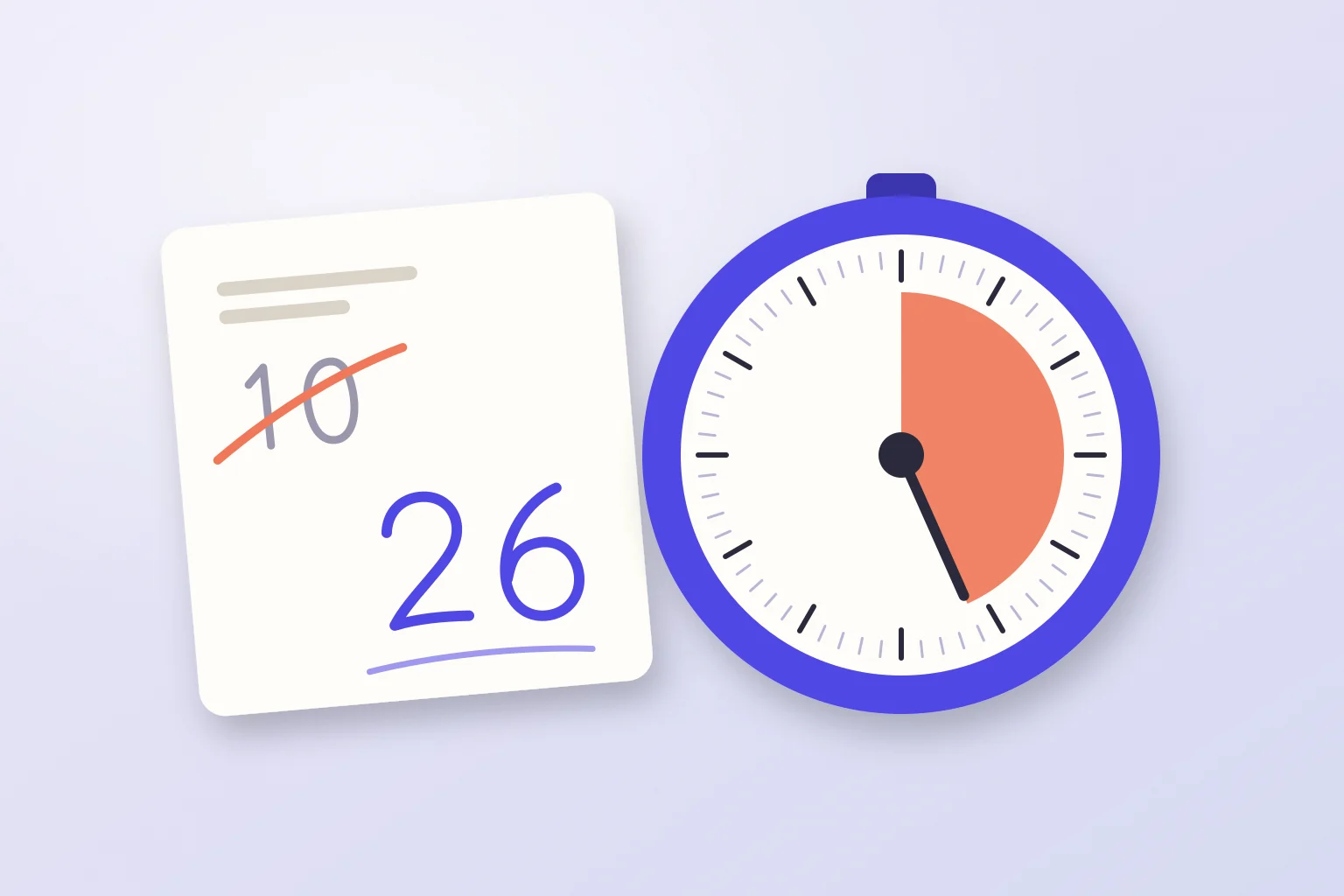
Frozen in front of a task? What to do in the next 10 minutes
It's 2 p.m. You've been at your desk since nine. You've got nothing done and you haven't rested either. You've read the first line of the same email four times, gone to the kitchen, come back, picked up your phone, put it down, picked it up.
You know exactly how bad this will feel at six o'clock. Somehow that isn't helping.
People call this task paralysis. It's an informal term and not a diagnosis. It comes up a lot in ADHD, and plenty of people without a diagnosis know it too. Whatever else it is, it isn't laziness. Lazy people are having a much nicer afternoon than you.
If you're stuck right now
Skip the theory and do this. Ten minutes, start to finish.
- 1.Get up and sit somewhere else. A different chair will do. It sounds silly, and it breaks up the loop you've been in for the last hour.
- 2.Say the task out loud in one sentence. “I need to answer Marta about the invoice.”
- 3.Name the smallest thing your hands would do first. Open the email. Type “Hi Marta”. That's now the whole job.
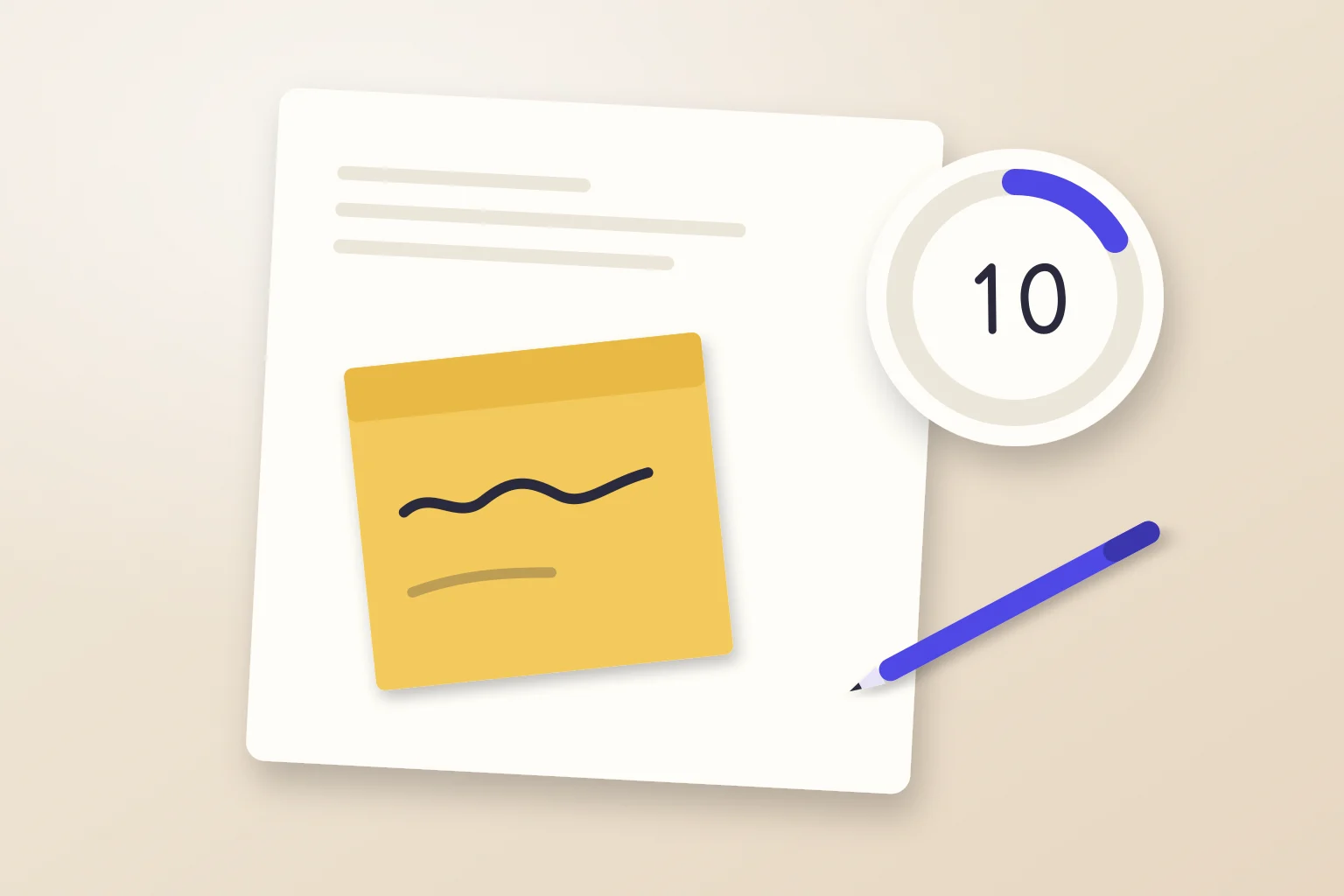
- 4.Set a timer for 10 minutes and give yourself permission to do it badly: typos, half-sentences, a reply you'd never send. You can fix a bad version later.
- 5.When it rings you're free to stop, and you have to really mean that. Then decide: another ten, or done for now. Either one counts.
If you got moving, great, go. If not, you're probably dealing with a specific kind of stuck, and each kind needs something different.
Three kinds of stuck
You can't choose
Five things are all urgent, so you spend an hour comparing them and do none. Flip a coin, seriously. With tasks of similar importance, picking the wrong one costs far less than another hour of picking. And if you feel a little disappointed when it lands, you've just found out which one you wanted.
You can't see the first step
“Do my taxes” isn't a step, it's a whole region. Your brain is being asked to begin something with no beginning, so ask one question: what would my hands be doing in the first two minutes? Finding last year's login. Looking for a folder. Those you can start.
There's a bonus here. In 2011, Masicampo and Baumeister found that making a specific plan for an unfinished goal cleared intrusive thoughts about it, before any of the work got done. So writing the step down helps even if you don't touch it for another hour.
You're dreading it
You know the first step perfectly well. You just don't want to open that email because of what it might say. No to-do system touches this, because the problem is a feeling. Sirois and Pychyl describe procrastination as short-term mood repair: you avoid the task, you feel better for a moment, and you pay for it later.
So deal with the feeling first. Say it, to someone if you can, or at least in writing: “I'm scared she's angry with me.” Then go back to the bad-version timer and make the first step as small as it'll go. On a day like this, reading the email counts as a whole step.
Three afternoons
Noor and the brown envelope
The letter from the tax office arrived on Monday. It’s Thursday, it’s still sealed, and Noor has cleaned the oven. She knows the first step, she’s just scared of what’s inside. So she skips the timer for now and texts her sister: “I’ve got a tax letter and I’m scared to open it.” Her sister sends back “open it and read me the first line”. Noor does. It’s a routine notice with a date on it, so it goes on the list with the date. It could have been worse, and then she’d have had a real problem and a sister on the phone, which still beats an imaginary one and a very clean oven.
Pavel and chapter three
Pavel has “write chapter 3” on his list, and it has been there since April. Every morning he opens the document, looks at the heading and feels his brain slide off it. He can’t see a first step because there are about two hundred. So he asks the two-minute question. His hands would be opening the folder of interview notes and finding the one with the quote about funding. That’s all he writes on the sticky note. He finds the quote, pastes it under the heading and types one bad sentence about why it matters. Then the timer rings, and he finds he’d like to fix that sentence, because it’s terrible. He’s now writing chapter 3.
Rosa and the five urgent things
Rosa runs a small shop, and at 2 p.m. she’s looking at an order to confirm, a supplier to chase, a rota with a hole in it, the accountant’s email and a broken card reader. All of it is urgent. She has been moving between them for an hour, starting each one and leaving it after a minute. So she asks which one stops her taking money today. It’s the card reader. Then she flips a coin for the rest, it says rota, and she notices she’s relieved, because she’d rather do that than the accountant. Fine. Rota. The accountant gets one line saying “Friday”, which takes the email off her chest for the price of one word.
Things that make it worse
- •Waiting to feel ready. The feeling usually shows up after you’ve started, if it shows up at all.
- •Another coffee. If you’re already wired and frozen, you’ll now be more wired and just as frozen.
- •Making a better plan. Reorganising your tasks feels very like work. It’s a lovely place to hide.
- •Just five minutes on your phone. You know how this goes. An hour later you feel worse, and you still have the task.
- •Promising yourself a huge catch-up tonight. That makes the job bigger and the evening worse, and now there’s something else to dread.
Go easy on yourself, for selfish reasons
Being harsh feels responsible. Mostly it adds one more bad feeling to avoid. In a 2010 study, Wohl, Pychyl and Bennett followed students across two exams, and those who'd forgiven themselves for procrastinating before the first one procrastinated less before the second. It's one observational study, so it can't prove cause. It does point the opposite way from the voice in your head.
Leave a note for tomorrow's you
When you stop, write the very next action on a sticky note and put it on your keyboard. “Reply to Marta, second paragraph.” Tomorrow's 9 a.m. starts with a step already chosen, which is one less thing to freeze on.
Make tomorrow harder to freeze in
- •Pick tomorrow’s first task tonight. Nothing is harder to decide at 9 a.m. than what to do at 9 a.m.
- •Leave the work open: the document on screen, the form on the table, the trainers by the door.
- •Put the dreaded thing first if you can, or give it a fixed moment and someone who knows about it.
- •Book a person. Working alongside a friend or a colleague, even on a silent video call, can help you start. People with ADHD often call this body doubling. We don’t know of solid trials of it, and it costs nothing to try.
When this is more than a bad afternoon
If you're frozen most days for weeks, if it comes with low mood or panic, or if the things you can't start are bills, food or getting out of bed, please talk to a doctor or a therapist. An article can't treat that, and neither can an app.
Questions people ask about task paralysis
What is task paralysis?
It’s an informal name for being unable to start something you want or need to do, even though you know what it is and that it matters. It’s different from choosing to relax: there’s no rest in it, and you usually feel worse by the hour.
Is task paralysis a symptom of ADHD?
It isn’t a diagnostic term. It comes up a lot in ADHD, and research links ADHD with more procrastination, but plenty of people without ADHD get it too, especially under stress or with a big, vague job. If it has been a pattern for most of your life, an assessment may be worth asking about.
Is it task paralysis or procrastination?
They overlap. Procrastination usually means putting something off, often by doing something nicer. Task paralysis describes being stuck, and you’re often not doing anything nicer at all. The fixes in this article work for both, so you can leave that question unsettled and start.
Could it be burnout?
It could be, if you’re also exhausted most days, have stopped caring about work you used to care about, and rest isn’t helping. A timer won’t fix that. Talk to a doctor, and take an honest look at how much you’re carrying.
Which app helps with task paralysis?
Anything that makes the first step smaller and keeps a timer close by. That could be the timer on your phone and a note. Task-breakdown tools can help when you can’t see the first step, and a planner that shows only today can help when you’re drowning in choices. If an app has a long setup, this isn’t the week for it.
How DayriOS helps with this
We built a few things for exactly this state, when even deciding how to start feels like too much.
- •AI task breakdown turns “do my taxes” into steps of about two minutes each. It's on Plus, five times a day, and Plus has a 7-day free trial.
- •Mental Unload takes whatever's in your head, by voice or text, and sorts it into tasks, worries and ideas. Also on Plus, five times a month.
- •On the free plan you can ask the AI coach, Dayri, “what's the smallest first step for this?”, with up to ten messages a day. It can see your tasks, so you don't have to explain them.
- •The focus timer is right there for your ten minutes.
You can do all of this on paper. The app earns its place on the days you're too stuck to pick up the pen.
Now go back up to step one. Which chair are you moving to?
DayriOS for procrastination
Break the task down, start the timer, get a nudge when it stalls.
Been putting one thing off for days?
How to find out what makes it hard to start.